Demystifying ISTA 6-FEDEX-A: The Ultimate Packaging Guide for Enterprise Hardware Sourcing
In global supply chains, transit damage is one of the fastest ways to lose customer trust, increase warranty costs, and erode profit margins.
As more North American brands tighten their logistics compliance, manufacturers are increasingly required to provide ISTA 6-FEDEX-A certified packaging before any products are approved to leave the factory floor.
Many sourcing teams casually refer to this requirement as “ISTA 6A.” Vertical-specific sortation networks mean that when a customer specifies FedEx parcel shipping, the only applicable protocol is ISTA 6-FEDEX-A, developed by the International Safe Transit Association (ISTA) in direct collaboration with FedEx.
As independent consultants connecting manufacturing execution with enterprise sourcing expectations, we break down what ISTA 6-FEDEX-A covers, how it differs from general industry standards, and how manufacturers can design packaging systems that meet enterprise procurement requirements with total confidence.
1. Scope & Applicability: Who Is This For?
ISTA 6-FEDEX-A is designed specifically for individually packaged (non-palletized) products weighing up to 150 lbs (70 kg) that travel through the FedEx Express or FedEx Ground parcel distribution networks.
Unlike general transportation standards, ISTA 6-FEDEX-A is a Member Performance Test. This means it explicitly reflects the mechanical stresses, drop heights, and automated handling conditions unique to the FedEx logistics environment.
Typical Industries Requesting This Validation:
- Enterprise IT & Networking Hardware
- Medical Devices & Precision Instruments
- Commercial Fixtures & Industrial Electronics
- Premium Cabinetry & Architectural Products (shipped individually)
Sourcing Insight: While ISTA 6-FEDEX-A is not a regulatory law, many North American OEMs, distributors, and enterprise procurement teams mandate it within their supplier compliance manuals. Meeting these specifications before mass production significantly reduces qualification delays and transit-related liability.
2. What Does ISTA 6-FEDEX-A Simulate?
Rather than evaluating a single, predictable drop test, ISTA 6-FEDEX-A recreates an entire multi-modal parcel distribution journey by exposing packaged products to a rigorous series of transport hazards:
- Manual Handling: Simulates loading, unloading, human handling, accidental drops, and package impacts during first- and last-mile sorting.
- Automated Sortation: Recreates the physical shocks encountered during conveyor transfers, high-speed diverters, chutes, and automated distribution hubs.
- Random Vibration: Captures multi-axis random vibration profiles derived from real-world FedEx fleet data, representing both truck and air cargo transportation conditions.
- Compression: Applies calculated compressive loads that simulate stacking and sustained vertical pressure during parcel transport.
- Environmental Conditioning: Prior to mechanical testing, samples are conditioned (typically following ASTM D4332 standards) to stabilize packaging materials and simulate atmospheric moisture degradation.
3. The Typical ISTA 6-FEDEX-A Testing Sequence
To produce a valid compliance report, ISTA-accredited laboratories must perform testing in the exact sequence prescribed by the protocol. Altering the order invalidates the certification.
| Testing Phase | Engineering Purpose (Mobile-Optimized) |
|---|---|
| 1. Conditioning | Stabilizes packaging materials before testing to simulate real-world atmospheric impact. |
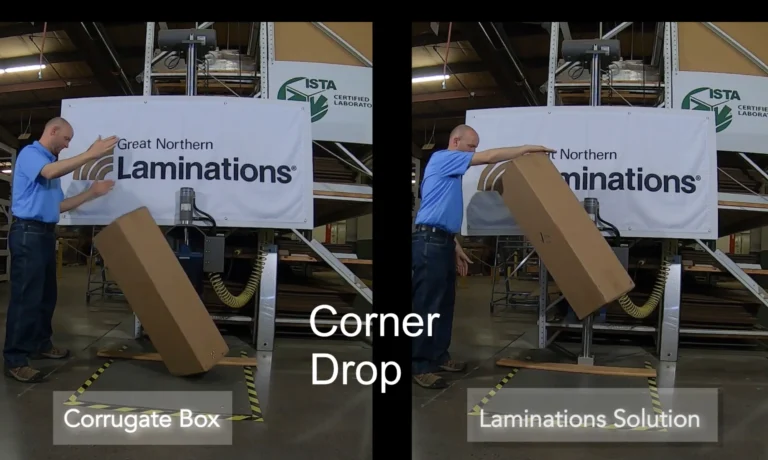
| 2. Shock (Drop) | A prescribed sequence of corner, edge, and face drops determined by precise package weight and geometry. |
| 3. Random Vibration | Applies FedEx-specific random vibration profiles to simulate long-distance air and ground transit. |
| 4. Compression | Applies calculated compressive forces to evaluate structural resistance against vertical stacking. |
| 5. Post-Vibration | Additional impact testing to evaluate whether internal cushioning remains effective after transportation fatigue. |
*Note: Scroll horizontally to view full table on mobile device.
⚠️ Engineering Note:
Testing parameters—including exact drop heights, vibration power spectral density (PSD), and compression loads—are strictly prescribed by the official ISTA 6-FEDEX-A protocol. Labs cannot modify inputs to accommodate structural product weaknesses.
4. ISTA 3A vs. ISTA 6-FEDEX-A: Key Differences
Sourcing teams frequently ask whether passing standard ISTA 3A is equivalent to passing ISTA 6-FEDEX-A. The short answer is no.
- Intended Distribution: ISTA 3A targets generic parcel delivery networks, while ISTA 6-FEDEX-A is engineered exclusively for the FedEx parcel network.
- Test Development: ISTA 3A uses industry-wide, generic transportation data. ISTA 6-FEDEX-A uses a customized profile built entirely from real-world telemetry captured within FedEx distribution infrastructure.
- Vibration Profiles: ISTA 6-FEDEX-A implements specialized, multi-axis FedEx-specific vibration profiles that are often more taxing on certain structural designs than general parcel testing.
- Customer Requirement: While ISTA 3A indicates general durability, passing ISTA 6-FEDEX-A is often a hard mandate specified by enterprise brand owners (such as HP or Dell) utilizing FedEx contracts.
5. What Constitutes a Passing Result?
To receive a successful compliance report from an ISTA-accredited laboratory, the post-test package must satisfy three primary performance conditions:
1. Product Protection
The product must remain fully functional after testing without structural damage, fractures, or performance degradation. Any cosmetic acceptance criteria must strictly follow the customer’s quality specifications.
2. Packaging Integrity
The outer shipping container must maintain sufficient structural integrity. While minor scuffing or outer surface deformation is expected, critical failures such as severe tearing, punctures, or catastrophic wall collapse mean a definite fail.
3. Internal Protection System
Internal protective components—such as foam inserts, molded pulp trays, or corrugated partitions—must remain properly positioned and continue to safeguard vulnerable product areas throughout the final fatigue sequences.
Why ISTA 6-FEDEX-A Matters for Global Manufacturers
For manufacturers supplying premium hardware, custom cabinetry, architectural components, or enterprise equipment, packaging should be treated as an integral part of product engineering—never as an afterthought before shipping.
Designing packaging systems that satisfy ISTA 6-FEDEX-A requirements helps your brand reduce transit damage, improve customer satisfaction, and minimize friction during high-stakes North American enterprise sourcing evaluations.
For global manufacturers competing in demanding B2B markets, robust packaging validation is more than a logistics exercise—it is a distinct competitive advantage.
About theShaper
At theShaper, we help manufacturers and sourcing teams bridge the gap between factory execution and North American procurement expectations. From supplier sourcing and packaging strategy to manufacturing audits and product development, our goal is to build supply chains that deliver quality, reliability, and long-term business success.
Looking to optimize your packaging systems or strengthen your sourcing pipeline? Reach out via theShaper platform.